Two-Stage High-Voltage Conversion
The circuit raises a 5 V DC input to approximately 96–100 V DC through an intermediate 24 V stage, distributing the voltage-conversion requirement across two power stages.
A two-stage high-voltage power-conversion and pulse-control module that converts 5 V DC to approximately 96–100 V DC, with microcontroller-controlled 1–20 mA current settings and selectable 1 Hz or 2 Hz pulse operation.
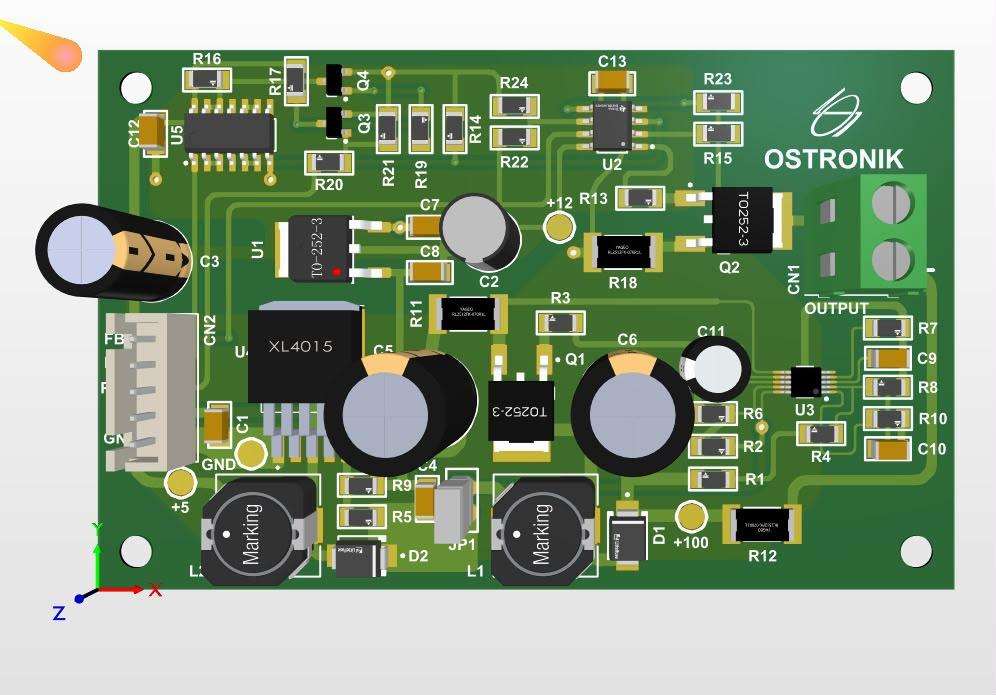
Peripheral nerve stimulation systems require precisely controlled electrical pulses with defined current levels and repetition timing. Meeting these requirements involves coordinating the high-voltage power supply, current-regulation circuit, pulse-generation stage, and microcontroller interface.
For this project, OSTronik India developed the power-conversion and pulse-control subsystem. A two-stage boost architecture first raises the input voltage from 5 V DC to 24 V DC. A second conversion stage then generates an approximately 96–100 V DC supply.
The high-voltage supply provides the voltage headroom required by the current-regulation stage across the connected load. A microcontroller controls the programmed output current and selects the required pulse repetition frequency.
The primary intended application is peripheral nerve localisation during regional anaesthesia.
A peripheral nerve stimulator, also known as a nerve locator, delivers controlled electrical pulses through a stimulation needle. When stimulation occurs near a motor nerve, the resulting muscle response can help a trained anaesthetist assess needle position during a nerve-block procedure.
The module developed by OSTronik India is intended to operate as the power-conversion and controlled pulse-generation subsystem within this type of equipment.
The project also demonstrates our capability to engineer programmable high-voltage, low-current pulse circuits for specialised electronic and medical-equipment applications.
The circuit raises a 5 V DC input to approximately 96–100 V DC through an intermediate 24 V stage, distributing the voltage-conversion requirement across two power stages.
Microcontroller-controlled current adjustment supports output settings from 1–20 mA, allowing the connected system to select the required current electronically.
The module supports pulse repetition frequencies of 1 Hz and 2 Hz, corresponding to one or two pulses per second.
The converter and pulse circuitry operate under microcontroller control and can be integrated with application-specific buttons, displays, indicators, and operating logic.
The power-conversion, current-regulation, and pulse-control circuitry are combined within a custom hardware design developed for the application.
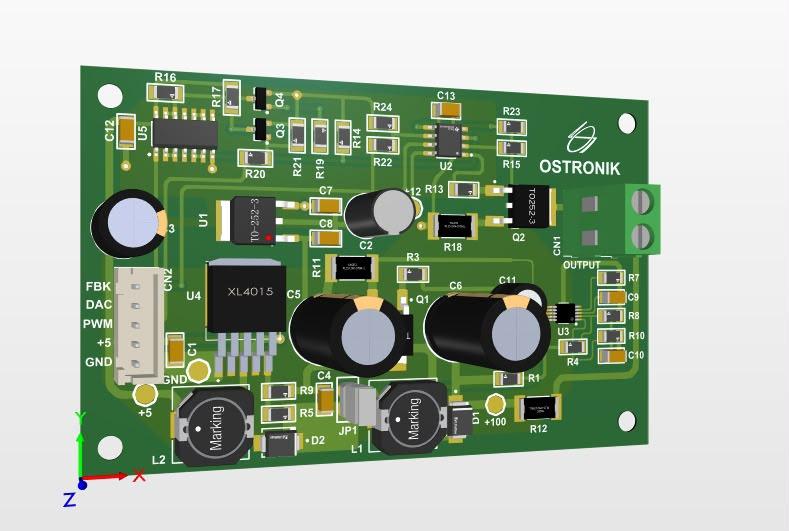
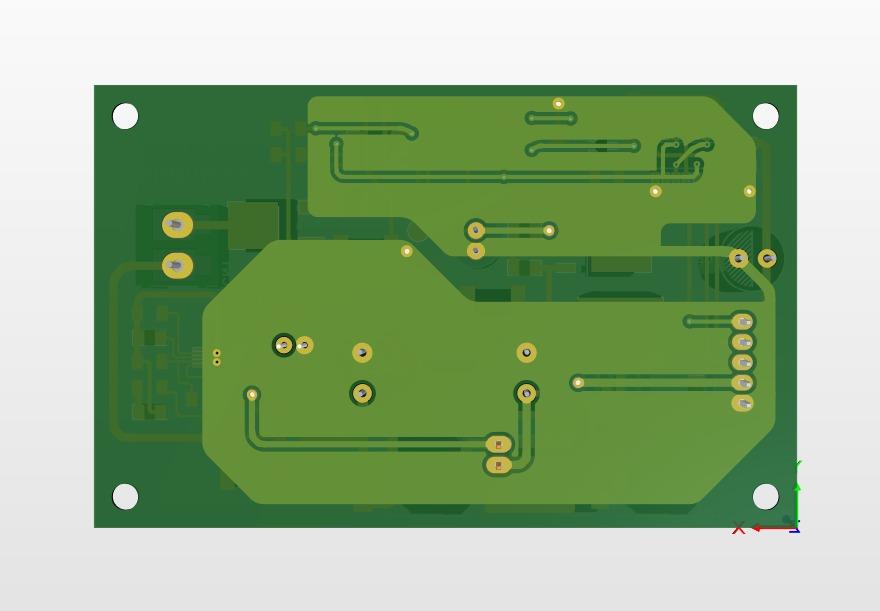
Power conversion, motor control, charging, and energy-management electronics.
Explore serviceCustom silicon-to-system design for industrial and consumer applications.
Explore serviceMulti-layer PCB design with manufacturing, EMI, ESD, and validation support.
Explore serviceShare your concept, specification, or existing design with our engineering team for a confidential project discussion.
Discuss Your Project